

Dr. Carol Cancelliere | Clinical Epidemiologist,
Rinaldi Research Chair in AI and Rehabilitation and Educator
Dr. Cancelliere’s mission is to advance musculoskeletal health research
through evidence and innovation.
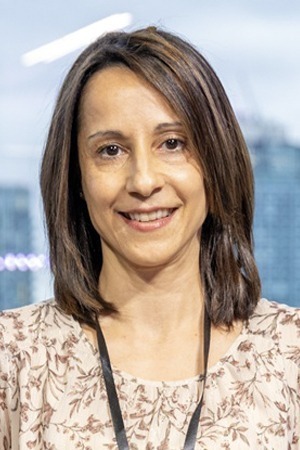
“Rehabilitation has often been an underfunded and under-researched area, but bringing the AI aspect to it can help bring it to the forefront.”
Background highlights:
- Graduate from the Canadian Memorial Chiropractic College (CMCC) in 2004
- Additional education highlights include Master of Public Health (MPH) from Lakehead University (2011) and Doctor of Philosophy (PhD) in Clinical Epidemiology and Health Care Research from the University of Toronto (2017), MBA (Health Management) (2024)
- Over a decade in full-time clinical chiropractic practice before transitioning to research and academia
- Served on the OCA Board of Directors from 2010 to 2018
- Adjunct professor in the Faculty of Health Sciences, clinical epidemiologist at Ontario Tech University, and scientist at Institute for Disability and Rehabilitation Research
- Lead of the Canadian Chiropractic Guideline Initiative (CCGI), supporting best-practice recommendations in musculoskeletal care
- Rinaldi Research Chair in AI and Rehabilitation as of 2025, advancing AI-supported and equitable rehabilitation research
- Recipient of the 2025 OCA Research and Academic Award
- OCA Aspire Strategic Data Advisory Council member
What is the primary focus of your research?
Much of my research has focused on evidence synthesis, which involves gathering evidence that is relevant to musculoskeletal health, including concussion. It’s a tough process, but essential to making the best recommendations to primary researchers and identifying overlooked areas and gaps in reporting and methodology.
As the Rinaldi Research Chair in AI and Rehabilitation, it’s become evident how there’s a need for “something else” in rehabilitation research. Rehabilitation has often been an underfunded and under-researched area but bringing the AI aspect to it can help bring it to the forefront.
What current research projects are you leading?
My team and I are currently working on a four-year project with Lakeridge Health Oshawa’s fracture department. One of the biggest issues older adults face is hip fractures, and we’re exploring digital and AI-supported solutions that can help this population.
In this project, we’re not just looking at creating technology. The hard part is figuring out the problems and where the needs lie across the entire continuum of care. Our goal is to truly understand the patients’, caregivers’, and hospital staff’s experiences. From there, we can iteratively prototype to find out what digital or AI solutions could look like.
Once we develop a strong prototype, we will pilot-test it to see how it works in real life – from hospital to home. Then we hope to apply what we learn to other prominent musculoskeletal issues, including chronic low back pain and osteoarthritis.
Another major focus of our work is social determinants of health and equity. We want to ensure that with any new innovations, we’re not leaving people behind who are typically excluded from these solutions.
How does your research work contribute to the advancement of chiropractic care?
My work is concentrated in musculoskeletal health, and musculoskeletal issues are one of the biggest contributors to disability and reduced quality of life. They also underpin many chronic diseases and comorbidities like diabetes, cardiovascular, and cancer. And it’s all relevant to chiropractors – they are professionals that work in this area.
However, by the very nature of what we do, we involve other disciplines in our work. It’s never just one profession. Our end goal is to figure out how to work together with each of our individual roles for the good of the individual we’re trying to help.
Why is knowledge translation crucial in research?
Knowledge translation is everything. Otherwise, papers stay in the academic spaces where they’re not really used by the people we’re trying to reach, especially researchers.
The support of associations like the OCA and CCA, and initiatives like CCGI is also crucial for helping with knowledge translation. They can help bring all that research information, synthesize and distill it in one place so that chiropractors and researchers don’t have to search for it on their own. There’s always an element of self-study and learning but having a place where you have a good overview of what’s going on is a helpful start for you to do your own information-searching.
What are the next steps in your research?
I’d like to see more implementation of different models of care – exploring how chiropractors can work in different communities – and then measuring broader outcomes and determining how, with this knowledge, we can contribute to our health-care system and patient outcomes.
How can students and chiropractors best stay informed about and integrate evidence-based research into their own practice?
Our profession already does a terrific job of gathering information to help each other stay informed on evidence-based research. A great place to start is to check in with your associations and existing resources like CCGI, read the news, see what’s going on in your communities, talk to other colleagues and health professionals in your area, go to workplaces and see what’s happening. Information comes in all sources, not just peer-reviewed articles or publications.
Always keep a common-sense approach to what you hear and read; knowing that social, physical, and mental health care aspects all contribute to a person’s health and wellbeing. Take everything in with this kind of lens.
And always be open to being wrong – in previous ways of practice, thinking, and ways of conducting research. This openness is what allows our profession to grow and evolve.