

By the time she was 10 years old, Dr. Jade Taylor was already learning what it meant to live with chronic pain. As a competitive dancer, she spent hours training, rehearsing, and performing, often pushing through discomfort. Years later, that early experience would shape her decision to become a chiropractor and influence the way she cares for patients today.
“Dance was always in the background of how I wanted to build my life,” she says.
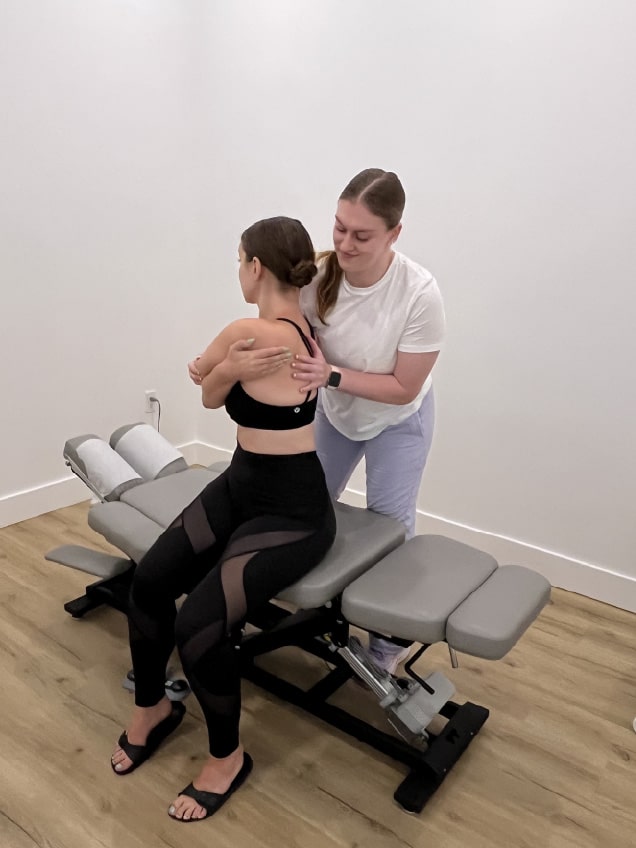
Having graduated from CMCC in 2025, Dr. Taylor is now a chiropractor practicing at The Wellness Hub in Stoney Creek Ontario and Touch of Health Chiropractic and Wellness in Fonthill, Ontario, bringing a depth of understanding dancers’ challenges to her practice. Her approach is informed by lived experience that includes resilience, frustration and a determination to create better outcomes for dancers.
Dancing through pain
Like many competitive dancers, Dr. Taylor trained intensely from a young age. By her teens, she was already dealing with chronic discomfort that interfered not just with dance, but with everyday life.
“I had excruciating, nauseating pain in my neck and shoulders,” she recalls. “Any time I lifted my arms above my head, I would have instant numbness, tingling within 10 to 20 seconds.”
In a discipline that demands sustained overhead movement, this pain was impossible to ignore. Over time, it became debilitating. She even struggled to complete basic daily tasks like brushing and washing her hair.
“That was quite debilitating at age 10,” she says. “And trying to seek answers but not really getting the answers I wanted was extremely frustrating.”
Despite consulting multiple health care providers, the message she received was often dismissive. Some even advised her to simply stop dancing altogether.
“Being told to stop following my passion, I just didn’t want to accept that,” she says. “So that’s kind of what inspired me to ‘be the change’.”
“Be the change”
Rather than walking away from dance, Dr. Taylor kept going. With the support of her parents and dedicated dance mentors, she learned to manage her pain independently. Still, for years, there was no clear diagnosis.
It wasn’t until she entered chiropractic school at the Canadian Memorial Chiropractic College (CMCC) that everything changed. After an assessment by CMCC interns and their supervising clinician, she was told she may have thoracic outlet syndrome. Further tests proved this hypothesis correct, and an official diagnosis followed.
“Just being heard and having those answers was satisfying, especially compared to my past experiences,” she says.
Her treatment involved a combination of passive care and, crucially, active care. Strength training outside of dance, particularly to rebalance overactive trapezius muscles, proved transformative.
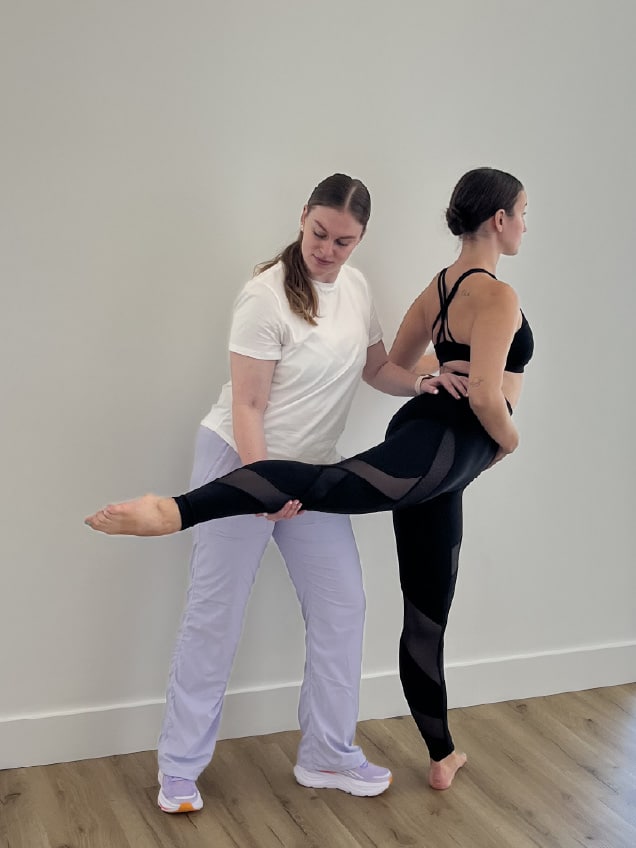
“The active care is what really helped,” Dr. Taylor explains. “Once I had a good treatment plan, I improved very quickly. I have little to no numbness now. I can dance fully. I can practice fully.”
That experience solidified her drive to use her chiropractic skills and training to help her patients manage pain so they can dance, move and get back to their everyday activities.
A Dancer’s lens in clinic
Today, Dr. Taylor’s dance background profoundly shapes how she practices. While her special interest lies in working with dancers, she brings the same movement-based, compassionate approach to all her patients.
Rather than relying solely on standard assessments, she asks patients to demonstrate the movements that aggravate their symptoms in daily life. This functional approach, rooted in her training, often reveals insights that traditional testing alone might miss.
“I don’t just assess the average range of motion,” she says. “I test what they’re actually doing every day.”
For dancers, her understanding runs even deeper. She speaks their language, understands their schedules and appreciates the physical extremes their bodies endure.
“I know the vocabulary. I know what they put themselves through,” she says. “That gives me a unique perspective that I try to take into every patient interaction.”
The physical challenges of dance
Dancers, Dr. Taylor explains, contend with challenges that are deeply appreciated by chiropractors. Demanding training schedules, long competitive seasons, and high physical expectations make rest and recovery challenging. Many begin intensive training at very young ages, accumulating wear and tear early on.
“There’s a culture of fighting through pain,” she says. “You don’t stop until you absolutely have to stop.”
Lower extremity injuries, such as ankle sprains, hip impingement, and knee pain are especially common. Muscle imbalances caused by repetitive movement patterns often go unaddressed, compounded by limited cross-training and insufficient recovery. As an expert in spine, muscle, and joint health, Dr. Taylor is well positioned to identify these imbalances early and help address issues before they develop into more serious injuries.
Education, she believes, is a key missing piece. Proper warmups, cool downs, strength training, and recovery strategies are not always emphasized in dance settings, particularly where teacher training requirements vary widely.
“There’s no requirement for dance teachers to have a strong educational background in anatomy or injury prevention,” she explains. “So education becomes a huge part of my role.”
Still dancing, still learning
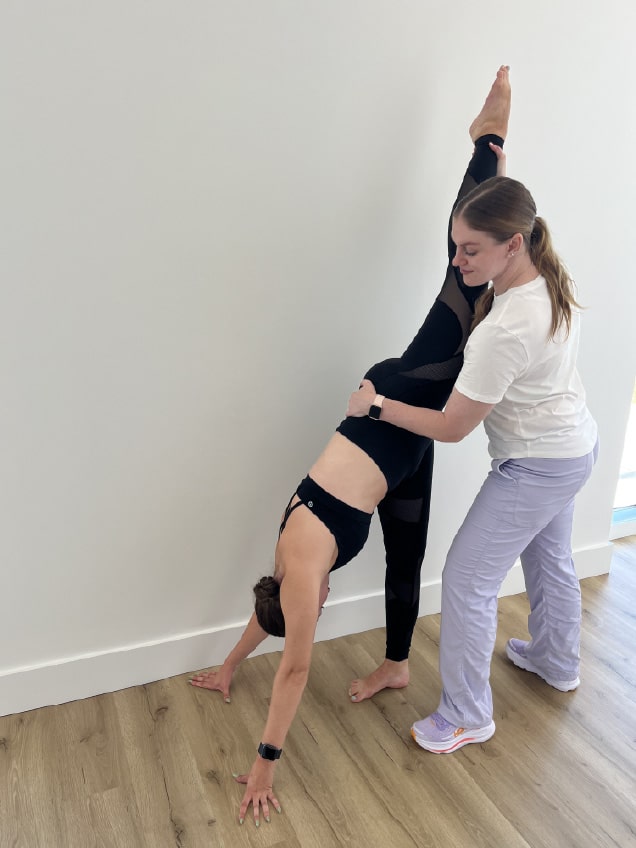
Despite the demands of clinical practice, Dr. Taylor remains deeply connected to the dance world. She continues to dance recreationally, taking drop-in classes and supporting fellow dancers’ projects across the Greater Toronto Area.
“[Dance] is such a creative outlet for me,” she says. “I could never give it up.”
Staying active in the community also keeps her clinically informed and professionally grounded.
“It helps me network with those dancers and figure out what their biggest issues are,” she says. “It leads me to be a better chiropractor.”
As she looks to the future, Dr. Taylor hopes to further bridge the gap between dance and health care.
She aims to provide chiropractic care to dancers both in and outside of the clinic, providing mobile chiropractic care within dance studios, performance companies and educational resources for dance educators, meeting dancers where they are rather than waiting for injuries to force clinic visits.
Ultimately, she wants to ensure dancers feel heard, understood, and supported.
“I’m hoping to prevent some of the negative experiences I had growing up,” she says. “Just making sure people know that it will get better.”
If you live in another part of Ontario, check the OCA’s online Chiropractor locator to find a chiropractor closer to you.